Who is this toolkit for?
Click here to tell your lawmakers you want AI surveillance like Flock out of West Virginia.
Contact your local representatives and ask them to pass the ACLU's model legislation on ALPR cameras.
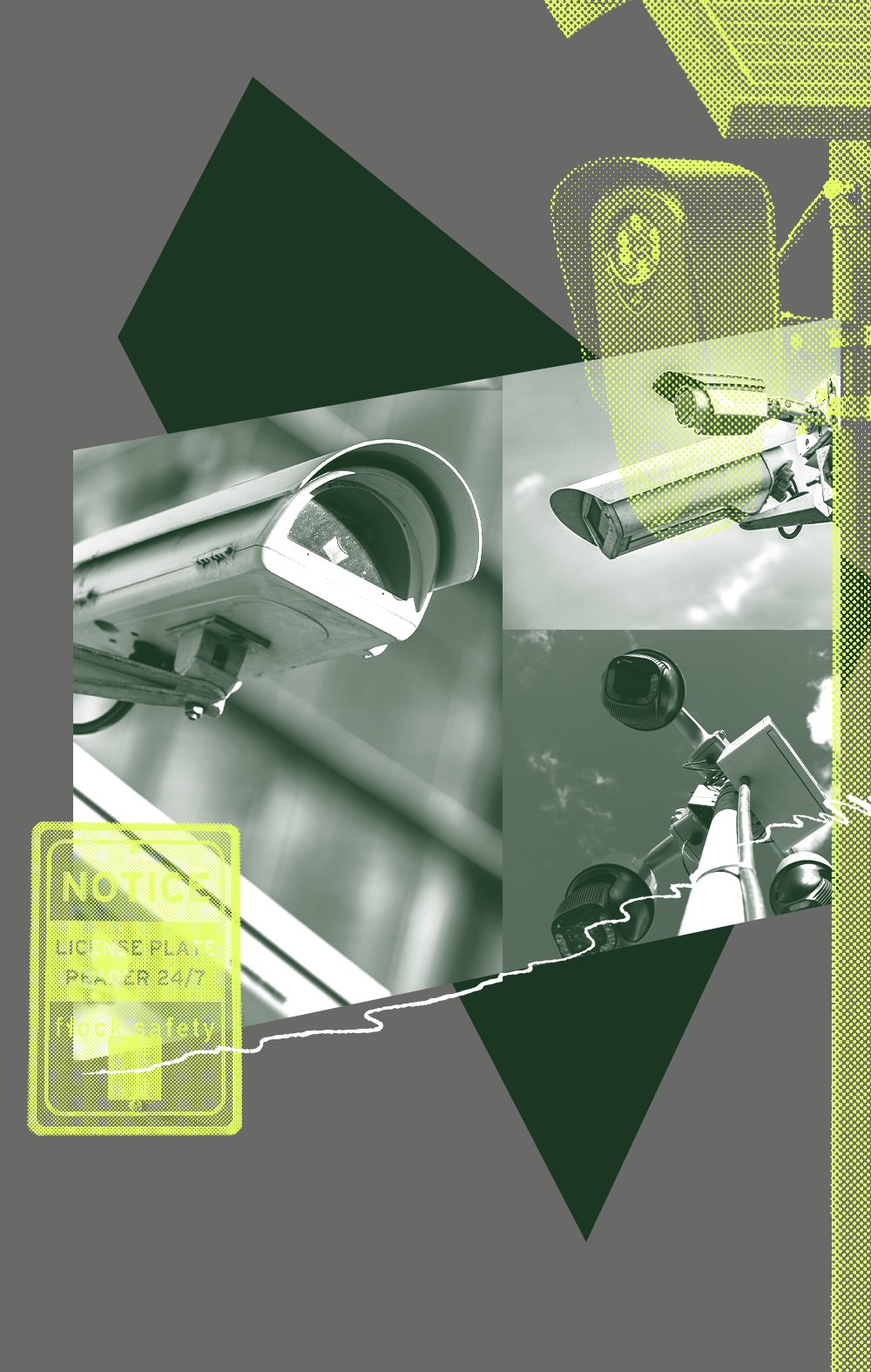
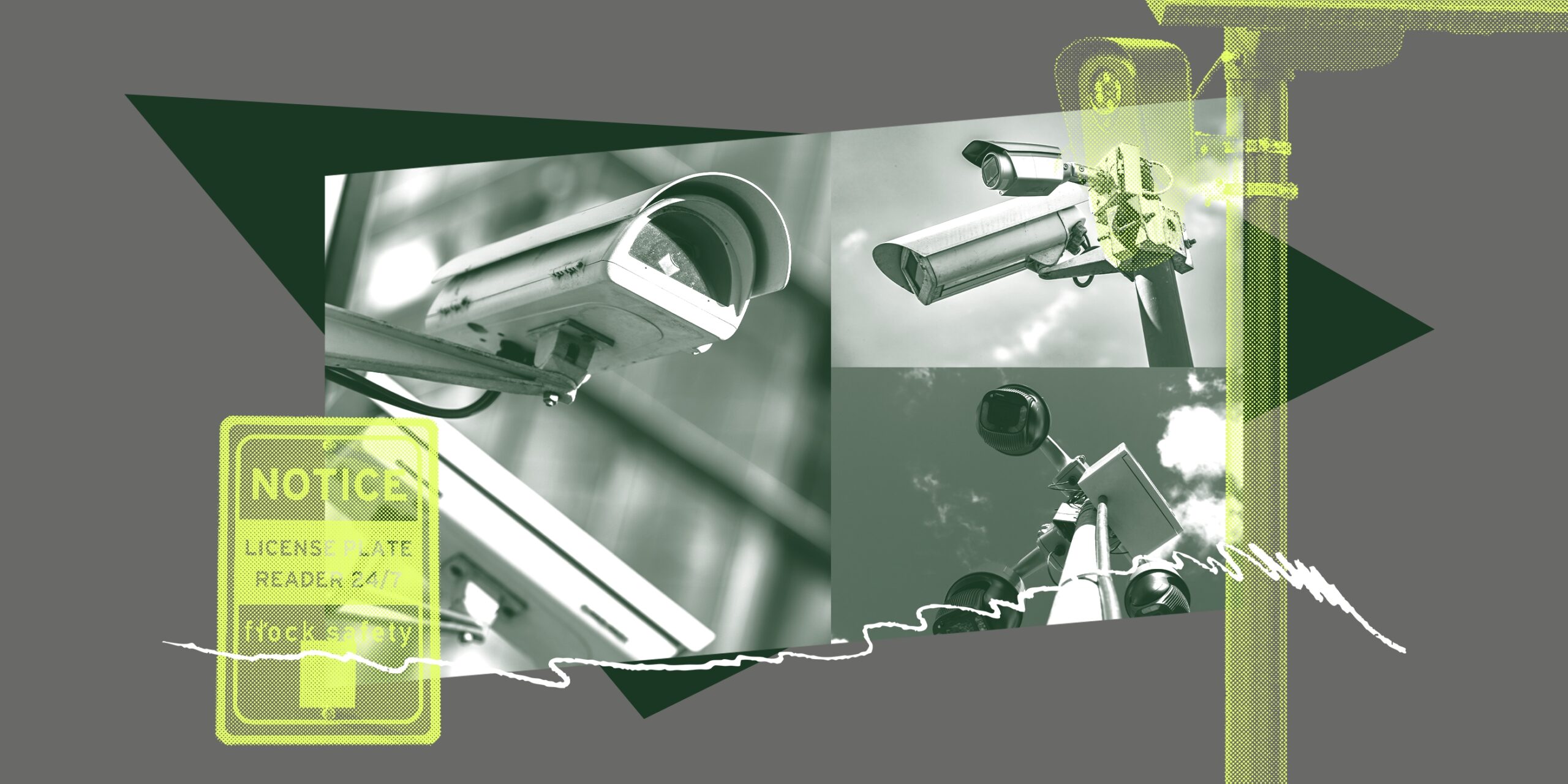
Surveillance cameras and Automatic License Plate Readers (ALPRs) from companies like Flock Safety are popping up across the country, taking videos of people going about their everyday lives and capturing photos of all vehicles that come into view and logging them into massive nationwide databases.
These creepy cameras make it possible to track everyone’s movements — even if you haven't been accused of a crime.
We've already seen how mass surveillance has been weaponized across the country. ICE has used Flock to go after immigrants without warrants. Kansas officers used ALPRs to pursue a man who wrote a critical op-ed about the police department. And a Colorado police officer wrongfully accused a woman of theft based on a Flock hit – and then refused to look at evidence proving her innocence.
Right here in West Virginia, communities are pushing back against mass surveillance — and it's working.
When Huntington City Council took up a $2.1 million contract with Flock Safety, residents packed City Hall. More than 50 people spoke against the company during public comment, and the meeting ran until roughly 4 a.m. before council approved the deal on a 6-4 vote — a plan for more than 40 license plate readers, 17 live video cameras, two drones and two gunshot detection devices.
That vote didn't end the fight. It started one.
In the weeks that followed, Barboursville's mayor and police chief announced they have no plans to enter into any similar contract, and Putnam County put its own contract on hold pending further research. St. Albans voted to reject the systems outright. Just across the Ohio river, officials in Ironton, Ohio moved to bar the city from contracting with any AI-powered license plate reader company at all.
Public pressure in Huntington also forced the city to tighten its own rules: Under an updated public safety ordinance, routine camera data is now retained for no more than seven days instead of 30, and the police chief's annual report must include complaints about camera misuse and the number of misidentification incidents.
Just two days after the Huntington contract was approved, ACLU-WV joined the Haslam Law Firm and Glazer, Saad, Anderson to sue the City of Huntington and Mayor Patrick Farrell in Cabell County Circuit Court over the contract. And Huntington residents launched a ballot initiative to ban third-party mass surveillance systems in the city and force the council to void its Flock contracts. As one organizer put it, "People in Huntington are so fired up about mass surveillance that the whole region is taking notice."
Opposition here isn't a left or right issue, either — the West Virginia Freedom Caucus has called on state and local officials to remove existing Flock systems and reject future warrantless surveillance technology, backing a Fourth Amendment Restoration Act that would require a warrant to spy on West Virginians.
We've pulled together the tools, resources, and best practices from organizers across West Virginia and the country into this local advocacy toolkit, so you can organize your own community against mass surveillance.
This toolkit will help you find out whether Flock or another mass surveillance company has already put cameras in your neighborhood. If they're already installed, we'll give you the model bills, records requests, and organizing tools you need to pressure your city council, county commission, and state legislators to cancel those contracts and take the cameras down. And if Flock hasn't reached your town yet, we'll walk you through how to prohibit or strictly regulate ALPRs before they get a foothold.
Find out what mass surveillance technology is already in your community
Companies like Flock Safety are setting up mass surveillance technology across West Virginia. Currently, their products include: pan tilt zoom cameras that are capable of tracking people's movements, microphone listening arrays that they claim are for gunshot detection, and AI-powered drones that are deployed to conduct surveillance.
The contracts for this technology are moving through West Virginia city councils and county commissions, billed as public safety initiatives. But all of the footage and audio gathered by this technology feeds into a single searchable platform.
Huntington's $2.1 million contract with Flock Safety, for example, includes more than 40 license plate readers, 17 live video cameras, two drones, and two gunshot detection devices, all approved in one 6-4 vote.
That's not public safety. It's privatized, nationwide surveillance and one city voting to become a feeder program for it.
Here's how to find out what's already deployed near you, and what your local government is considering.
Know What You're Looking For
• License plate readers (Flock Falcon, Sparrow). These cameras photograph every passing vehicle and log the plate, make, model, color, and distinguishing features like bumper stickers or roof racks.
• PTZ and fixed video cameras (Flock Condor). Pan-tilt-zoom cameras continuously record intersections, parking lots, and parks, and provide live streaming and are accessible by Flock in perpetuity. These watch people, not just vehicles. In December 2025, 404 Media reported that dozens of Condor cameras were reachable from the open internet, exposing live feeds and stored footage to anyone who found the addresses.
• Audio detection (Flock Raven). These are pole-mounted microphones sold as "gunshot detection." In October 2025 Flock expanded the product to detect "human distress," which initially included screaming. Similar gunshot detection systems in other cities have generated high volumes of alerts that turned out not to be gunfire.
• Drones (Flock Aerodome / Alpha). These are docked drones that launch automatically in response to a 911 call, a plate hit, or an audio alert, streaming HD, thermal, and night-vision video. Flock says Alpha can read plates from up to 2,000 feet.
• Third-party camera integration (Flock Wing). This a software that pulls existing cameras (including business, school, and HOA cameras) into Flock's platform. Your town may be connected to the network without buying a single Flock device.
• The platform itself (FlockOS, Nova). This is the layer that ties every device together and combines it with outside data sources. The devices are the visible part; the database is the actual product.
Flock leases, it doesn't sell. Hardware stays Flock's property and should be removed if a contract ends, but that's not always the case. And, Flock contracts state they retain information they gather in perpetuity. Surveillance gathered by Flock lasts forever.
Finding Surveillance Devices in Your Community
• Deflock.org has a crowdsourced map of camera locations, with roughly 636 already mapped across West Virginia. You can add devices you spot yourself.
• The Electronic Frontier Foundation's Atlas of Surveillance tracks government programs for cameras, drones, gunshot detection, camera registries, and real-time crime centers.
• Have I Been Flocked? lists public audits of agencies using Flock, and Eyes on Flock aggregates transparency portal data, including how many outside agencies each department shares with.
• Search for your locality's Flock transparency portal, or check this crowdsourced list. Huntington's mayor committed to launching one — check whether it's live and what it actually discloses.
• Search council and commission agendas and minutes for "automated license plate reader," "ALPR," "Flock," "Condor," "Raven," "Aerodome," "drone as first responder," "DFR," "gunshot detection," "real-time crime center," "Axon," "Motorola Solutions," "Genetec," or "Rekor."
Use West Virginia's Open Records Law
• Under the West Virginia Freedom of Information Act, the records custodian must respond within five business days; granting the request, telling you when and where you can inspect the records, or denying it in writing with specific reasons.
• You don't have to say why you want the records. West Virginia law requires no statement of purpose and places no restriction on what you do with what you receive.
• Agencies can charge for actual copying costs, but cannot charge search or retrieval fees based on staff hours. Push back if someone quotes you an hourly rate.
• Ask for the full package, not just the plate reader piece: the contract and all amendments, the purchase order, device-by-device inventory and locations, the department's written policies for each device type, data-sharing agreements and the list of agencies with access, search audit logs, and correspondence with the vendor.
• For drones specifically, ask for the FAA authorization or waiver the department is operating under, flight logs, and the policy governing when a drone is launched and what it's permitted to record on the way.
• For audio detection, ask for the alert log and how many alerts were confirmed as actual gunfire.
• Expect the law enforcement exemption at W. Va. Code §29B-1-4(a)(4) to be invoked. It covers active investigation records but not contracts, budgets, policies, inventories, or vendor emails. A blanket denial on those is worth challenging.
• The National Freedom of Information Coalition has a West Virginia sample request letter you can adapt.
A public records request by ACLU-WV investigative reporter Kyle Vass turned up emails between the Huntington Police Department and Flock Safety discussing a "large deployment" months before council ever voted. You can do the same thing in your town.
Ask your representatives to stop mass surveillance in your community
Whether or not Flock has reached your town yet, you can ask your state legislators and your local officials to ban or strictly regulate this technology.
There's already a vehicle in West Virginia. The Fourth Amendment Restoration Act has been introduced in two consecutive legislative sessions and died in the House Judiciary Committee both times, most recently in 2026. After Huntington's vote, the West Virginia Freedom Caucus renewed its push, calling on state and local officials to remove existing Flock systems and reject further warrantless surveillance.
When you contact your legislator, you are not asking them to take a partisan position, you are asking them to join a coalition that already spans the whole political spectrum in this state.
You can read the ACLU's model ALPR legislation for state governments and the modified version for local governments. For city councils and county commissions looking to get out of an existing contract, we've drafted a model resolution for canceling a Flock agreement.
The fastest way to be heard is our action form.
We've already matched West Virginia addresses to legislative districts, so you don't have to look anything up: Tell your legislator: no Flock surveillance in West Virginia. You can send the prewritten message as-is, but messages that include a sentence or two in your own words carry considerably more weight with a legislative office.
You can also find your delegate and senator directly through the West Virginia Legislature's website, and your city council or county commission contacts on your local government's site.
Sample message to your state or local representatives
Copy and adapt the message below. Adding a sentence about your own community, a camera you've seen, or a council vote you attended makes it far more effective than a form letter.
Subject line: Get Flock out of our communities
Message:
Dear [representative's name],
As your constituent, I'm asking you to rein in the use of mass surveillance technology in [community].
Companies like Flock Safety are selling our cities and counties bundled systems that go well beyond license plate readers: pan-tilt-zoom cameras that watch people, microphones on utility poles, and drones that launch automatically. All of it feeds a searchable database that local officials do not fully control and that outside agencies, including federal agencies, have obtained access to elsewhere in the country.
This technology is error-prone. It has misread plates and led to innocent people being wrongly accused. It has been misused by officers to stalk and harass women. And in Huntington, residents packed City Hall until nearly 4 a.m. to object before council approved a $2.1 million contract anyway.
But you have the power to protect West Virginians from warrantless surveillance. I'm asking you to support legislation that either bans this technology outright.
[Add one or two sentences about your own community here.]
Every day these systems operate, they collect sensitive information about where West Virginians worship, seek medical care, and travel. Please act.
Sincerely,
[Your name]
[Your city]
Build a local movement to ban mass surveillance
Huntington residents are leading the charge to show how you can fight back against mass surveillance when your local government sells you out to a third-party tech company.
In July 2026, Huntington City Council approved a $2.1 million contract with Flock Safety (more than 40 license plate readers, 17 live video cameras, a drones, and two microphone listening arrays). Residents packed the chamber to object. More than 50 people spoke. The meeting ran until nearly 4 a.m. Council voted 6-4 to sign anyway.
That was not the end of it. Organizers with the Huntington Community Action Group launched "Get the Flock Out: Huntington," a ballot initiative under Article 12 of the city charter that would ban third-party mass surveillance systems and force the city to void its Flock contracts. They are currently canvassing all nine council districts of the city and have set out to collect roughly 4,000 signatures to get a ban on mass surveillance on the ballot.
Do this where you live. Read your municipal charter. Many West Virginia towns have initiative and referendum provisions like Huntington's, and almost nobody knows it. Get council and commission agendas before the meeting, Build a coalition wider than the people who already agree with you: immigrant communities, gun owners, congregations, people seeking reproductive or gender-affirming care, and constitutional conservatives all have reason to oppose warrantless tracking.
Contact ACLU-WV. We are tracking contracts statewide, filing records requests, and working alongside communities from Morgantown to Huntington. Reach out to ACLU-WV's investigative reporter who is volunteering with the effort in Huntington: Kyle Vass at [email protected]